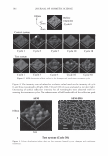
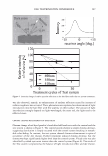
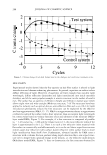
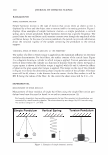
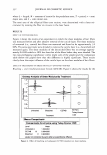
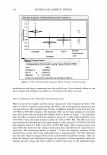
]. Cosmet. Sci., 58, 3 75-383 Quly/ August 2007) High throughput workflow for coacervate formation and characterization in shampoo systems T. H. KALANTAR, C. J. TUCKER, A. S. ZALUSKY, T. A. BOOMGAARD, B. E. WILSON, and M. LADIKA, The Dow Chemical Company, Core R&D, 1712 Building, Midland, MI 48674, S. L. JORDAN, W. K. LI, and X. ZHANG, Amerchol Corporation, A Subsidiary of The Dow Chemical Company, 171 River Road, Piscataway, NJ 08854, and C. G. GOH, Dow Chemical Pacific (Singapore), 16 Science Park Drive, Singapore. Synopsis Cationic cellulosic polymers find wide utility as benefit agents in shampoo. Deposition of these polymers onto hair has been shown to mend split-ends, improve appearance and wet combing, as well as provide controlled delivery of insoluble actives. The deposition is thought to be enhanced by the formation of a polymer/surfactant complex that phase-separates from the bulk solution upon dilution. A standard char- acterization method has been developed to characterize the coacervate formation upon dilution, but the test is time and material prohibitive. We have developed a semi-automated high throughput workflow to characterize the coacervate-forming behavior of different shampoo formulations. A procedure that allows testing of real use shampoo dilutions without first formulating a complete shampoo was identified. This procedure was adapted to a Tecan liquid handler by optimizing the parameters for liquid dispensing as well as for mixing. The high throughput workflow enabled preparation and testing of hundreds of formulations with different types and levels of cationic cellulosic polymers and surfactants, and for each formulation a haze diagram was constructed. Optimal formulations and their dilutions that give substantial coacervate formation (determined by haze measurements) were identified. Results from this high throughput workflow were shown to reproduce standard haze and bench-top turbidity measurements, and this workflow has the advantages of using less material and allowing more variables to be tested with significant time savings. BACKGROUND Coacervation is a critical phenomenon in shampoo applications (1). In shampoo formu- lations with polycationic polymers and anionic surfactants, different types of polymer/ surfactant aggregates can form depending on concentration of a formulation (2). In formulations with high concentration of surfactants (above the surfactant CMC), the anionic micelles shield electrostatically the cationic polymer and it is solubilized. Upon dilution (-10-fold) of the shampoo formulations, two types of complex polymer/ B. E. Wilson's current address is Oak Ridge National Laboratory, P.O. Box 2008, Oak Ridge, TN 37831. Address all correspondence to M. Ladika. 375

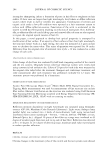
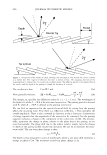
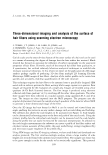
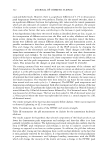
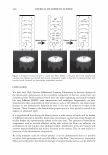
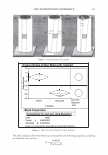
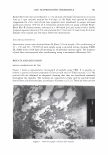
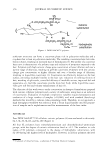
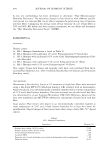
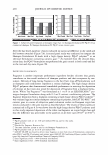
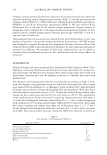
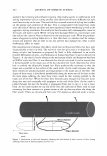
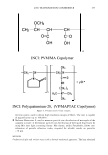
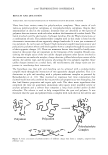
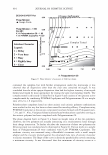
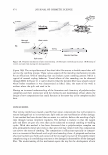
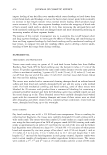
376 ( JOURNAL OF COSMETIC SCIENCE 9!"3 CH-N-CH Cl 3 I 3 /o -(CH2CHP)x(CH21Hc-H)YH C 2 OH 0 ? H 5) H (CH2CH20)£ (CH 2 CHC-H)iH I+ . Cationic substitution I CH3�·CH3 Cl C12H2s -- Hydrophobic substitution Figure 1. DOW SoftCAT™ polymers. surfactant structures can form: a coacervate phase rich in polycation molecules and a co-phase that is lean in polycation molecules. The resulting coacervates have low solu- bility in water, resulting in increased haze of formulations (3). The profile of a coacervate haze curve is characteristic of a polymer type and indicative of properties imparted to the hair. Polymers with high cationic charge give coacervation at lower dilution and over a narrow range of dilutions, resulting in gel-like coacervates. Polymers with low cationic charge give coacervation at higher dilution and over a broader range of dilutions, resulting in liquid-like coacervates (3). Coacervates can effectively deposit on the hair surface, providing multiple benefits in the hair care: reduction of combing friction of hair, mending of split-ends, controlled delivery of insoluble actives, improved feel and appearance, etc. Gel-like coacervates provide more hair body, while liquid-like coacer- vates give soft feel and volume enhancement of hair (3 ). The objective of this work was to study coacervation in shampoo formulations prepared with cationic cellulosic polymers and a variety of surfactants, using haze as an indicator of coacervation. Evaluation of multiple composition variables required preparation and evaluation of a large number of samples ( 10,000), and with standard (bench-top) methods this would be a tedious, time-consuming work. Therefore, in our approach, a high throughput workflow was selected, with a Tecan liquid handler used for prepara- tion of samples and a nephelometer used for measurements of the haze index. MATERIALS Four DOW SoftCAT™ SL cellulosic cationic polymers (4) were evaluated in this study: SL-5, SL-30, SL-60, and SL-100 (Figure 1). All four SL polymers have trimethylammonium and dimethyldodecyl-ammonium groups, with the degree of cationic substitution fixed at -0.2. The numbers in code names of SL polymers correspond to the degree of hydrophobic substitution, with SL-100 having the highest level of hydrophobe. However, in all four polymers the level TM Trademark of Amerchol Corp., a subsidiary of The Dow Chemical Company.
Purchased for the exclusive use of nofirst nolast (unknown)
From: SCC Media Library & Resource Center (library.scconline.org)