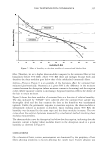
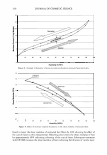
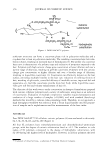
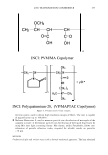
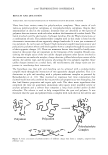
]. Cosmet. Sci.! 58, 435-441 Quly/August 2007) Hydrolyzed protein derivatives accompanied with synergy by silylation or siliconizing AYAKO KOYANAGI, Seiwa Kasei Co., Ltd., 1-2-14, Nunoichi-cho, Higashiosaka, Osaka, 579-8004 Japan. Synopsis Effects on hair, of a newly developed hybrid polymer consisting of hydrolyzed protein, modified with an alkyl chain and silicone was investigated. And it was confirmed that the polymer had color retention effect on dyed hair, and good substantivity contributing to hair luster, manageability, moist feel, smoothness and good combability. The above effects were displayed, especially on damaged hair. INTRODUCTION Many kinds of ingredients for hair treatment have been studied and developed, such as hydrolyzed proteins, silicones, oils, polymers, their derivatives and so on. Above all, hydrolyzed proteins and silicones have been widely used because the former gives hair wet feel, tenderness and gloss, and the latter gives hair also gloss, smoothness and good combability (1,2). However, both have weak points at once. Hydrolyzed protein is tightly adsorbed on hydrophilic part of hair (3), but it is easily washed off from hydro- phobic part of hair, and silicone is hardly adsorbed on hydrophilic part of hair (4). It is well known that chemical process on hair, such as permanent waving, coloring, bleaching causes hair damage which increases hydrophilic part on hair. On the other hand, hair coloring has been recently in fashion. Therefore, the ingredients suitable for damaged hair are strongly desired. In the viewpoint of this background, we have recently developed a new polymer con- sisted of hydrolyzed protein, alkylmethylpoly�iloxane (abbreviated as siliconized HPS, hereafter). Since siliconized HPS has both of hydrophilic part and hydrophobic part, siliconized HPS was expected to be adsorbed to damaged hair effectively, and to give properties of hydrolyzed protein and silicone to the hair at once. Siliconized HPS was evaluated on anti-discoloring effect, improvement of moist feel, and substantivity to hair in comparison with dimethylpolysiloxane (dimethicone) and ami- noethyl aminopropylsiloxane dimetylsiloxane copolymer emulsion (amodimethicone), both of which have often been added to hair treatment formulas to improve hair touch. MATERIALS AND METHODS The INCi name of siliconized HPS produced by Seiwa Kasei Co., Ltd. is hydrolyzed silk PG-propyl methylsilanediol crosspolymer. The structure of siliconized HPS is as shown 435

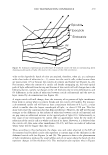
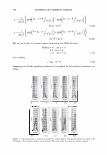
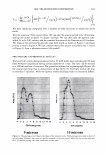
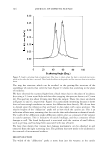
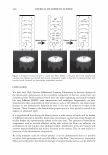
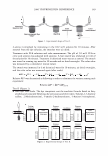
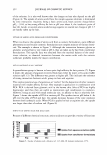
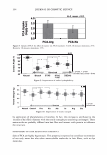
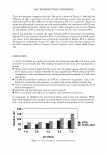
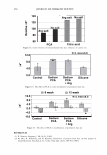
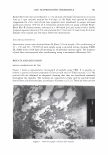
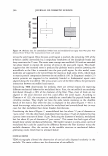
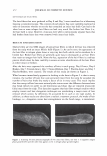
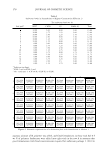
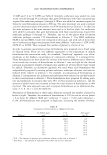
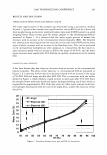
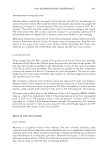
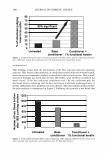
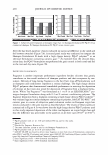
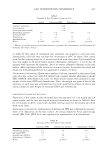
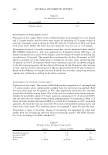
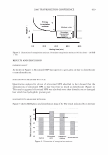
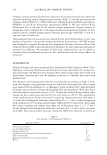
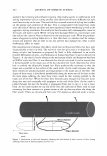
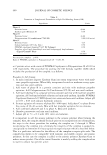
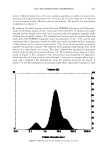
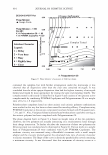
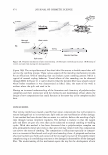
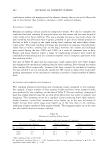
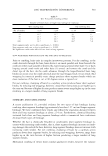
436 JOURNAL OF COSMETIC SCIENCE in Figure 1. For comparison to siliconized HPS, amodimethicone which is wildly used for hair care product, and dimethicone (6000cs) which has the same range of viscosity as siliconized HPS were used. HAIR SAMPLE Japanese female scalp hair, which had never been processed by chemical treatment, was used. The hair was soaked in aqueous solution of sodium polyoxyethylene (3) laurylether sulfate for 30 minutes at 40 ° C. The volume of the solution was ten times more than the volume of the hair. Then the hair was rinsed with distilled running water and dried with a hair dryer. PREPARATION OF DAMAGED HAIR (BLEACHING) In order to keep test result in precision and reproducible, the hair was bleached mildly. For bleaching, the aqueous bleach solution that is the same volume with the hair (3% hydroperoxide, 1 % ammonium hydroxide) was used. The hair was soaked in the solution for 30 minutes at 30°C and rinsed with running distilled water. Subsequently, the hair was soaked in buffer solution (pH 3.0 of 0.1 mol/L citric acid-0.2 mol/L disodium hydrogen phosphate) that volume is 10 times more than the volume of the hair for 5 minutes, and rinsed with distilled running water. Furthermore, the hair was soaked in deionized water that volume is 10 times more than the volume of the hair for 5 minutes, and dried with a hair dryer. Tresses were made from the above processed hair and were used in the following examinations. GLOSSING EFFECT Preparation of hair sample. Three tresses of bleached hair were prepared in 15 cm length and each hair tress was 1.5 grams weight. Those tresses were treated by spreading 2.0 grams of each hair treatment cream as shown in Table I, kept for 10 minutes at 40 ° C and dried with a hair dryer. Measurement of glossing effect. For measuring gloss effect, Goniphotometer GP-200 (Mu- rakami color technical center) was employed. SUBSTANTIVITY (MEASURED WITH ICP) Preparation of hair sample. Two tresses of bleached hair were prepared in 15 cm length and 0.5 grams weight, and the tresses were treated with each hair treatment cream as shown Figure 1. Structure of siliconized HPS (a, b, c and d shows degree of polymerization).
Purchased for the exclusive use of nofirst nolast (unknown)
From: SCC Media Library & Resource Center (library.scconline.org)