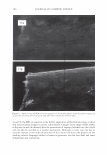
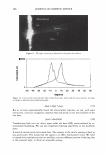
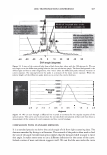
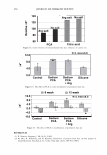
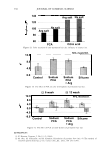
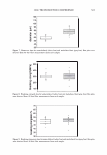
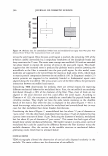
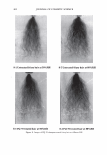
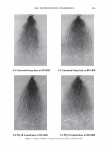
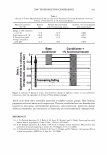
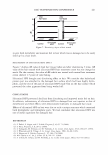
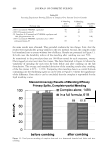
450 JOURNAL OF COSMETIC SCIENCE CONCLUSIONS Both investigated methods for the determination of silicones adsorbed on human hair from shampoos can be usefully applied for substantivity studies. While the main ad- vantage of the X-ray fluorescence method is the applicability to hair strands without extraction and the possibility to repeat treatments and measurements at the same hair strands, the benefit of ICP-OES of extracts is a smaller limit of detection and the fact that quantitative data can be obtained. In contrast, the faster XRF method delivers just semi-quantitative data which allow detecting build-up effects and removability of sili- cones. The analytical method developed for the quantification of the hydrogenated didecenes allows the quantification of low hydrocarbons levels in extracts of treated hair strands. It was demonstrated that a comparison of analytical data with results from performance measurements can be used to understand the effects of emollients on hair properties like conditioning and hair volume. The shampoo with hydrogenated didecene shows a good conditioning performance while retaining the volume of the shampooed hair strands. REFERENCES (1) E. G. Gooch and G. S. Kohl, Method to determine silicones on human hair by atomic absorption spectroscopy,]. Soc. Cosm. Chem., 39, 383-392 (1988). (2) S. R. Wendel and A. J. DiSapio, Organofunctional silicones for personal care applications, Cosmet. Toiletr., 98(5), 103-106 (1983). (3) H. M. Klimisch and G. S. Kohl, A quantitative diffuse reflectance method using Fourier transform infrared spectroscopy for determing siloxane deposition on keratin surfaces,]. Soc. Cosmet. Chem., 38, 247-262 (1987). (4) J. V. Gruber, B. R. Lamoureux, N. Joshi, and L. Moral, Influence of cationic polysaccharides on polydimethylsiloxane (PDMS) deposition onto keratin surfaces from a surfactant emulsified system, Colloidr Surf B., 19, 127-135 (2000). (5) K. Yahagi, Silicones as conditioning agents in shampoos,]. Soc. Cosmet. Chem., 43, 275-284 (1992).

]. Cosmet. Sci., 58, 451-476 CTuly/August 2007) Semi-permanent split end mending with a polyelectrolyte complex R. RIGOLETTO, Y. ZHOU, and L. FOLTIS, International Specialty Products, 1361 Alps Road, Wayne, N.J. 07470. Synopsis Split ends form through mechanical stresses during grooming procedures and are more likely to appear in hair damaged as a result of excessive combing forces. Although there are no conventional systems that will permanently mend split ends, a semi-permanent mending composition has been achieved through a poly- electrolyte complex. The complex is formed as a result of the ionic association of a cationic polymer, Polyquaternium-28, and an anionic polymer, PVM/MA Copolymer. Hair tresses containing tagged split ends are used in measuring mending efficacy. The tagging allows the fate of the split ends to be determined after different types of treatment regimens which test the durability of the mend. Monitoring of the repair and mending durability is carried out with the aid of a stereomicroscope. Results obtained with this method indicate that the complex both by itself and when formulated into a simple lotion provided a high level of split end mending not only after initial treatment but more importantly after combing showing the durability of the mend. Cumulative effects and durability to washing indicate that the polymer complex does not build up on the hair and rinses off with shampoo making possible its usage as a post shampoo treatment. The formulated lotion has higher durability performance as compared to a commercial product with a split end mending claim. The proposed mechanism of action entails a crosslinking microgel structure that infiltrates the damaged hair sites binding them together. This model is supported by the analysis of phase behavior, viscometry, Scanning Electron Microscopy, and absorption of ionic dyes. INTRODUCTION The manifestation of damaged hair as seen macroscopically as we view whole hair attributes is based on the state of each of the individual fibers taken collectively. Different types of damage are observed on a microscopic scale using scanning electron microscopy as a diagnostic tool (1). These consist of transverse fractures through the hair's cuticle, transverse fractures of the whole fiber, delamination within the cuticle, longitudinal splitting of the hair shaft (split ends), and multiple longitudinal splitting of the hair shaft (trichorrhexis nodosa) (2). Each of these structural maladies when multiplied by the number of fibers is portrayed in whole hair attributes such as dullness, lack of manageability or stylability, rough texture, and poor combability. The hair as a whole based on the state of the individual fibers looks unhealthy. There are multiple causes for this damage and encompass physical, chemical, and en- vironmental factors. Versatility of hair styles is a major cause of the predominance of hair damage. Consumers desire products that allow them to express their individuality and personal style to a greater extent. Keeping up with the latest hair style fashion includes 451
Purchased for the exclusive use of nofirst nolast (unknown)
From: SCC Media Library & Resource Center (library.scconline.org)