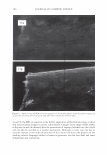
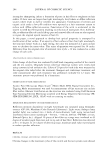
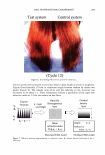
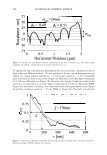
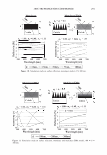
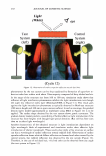
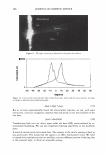
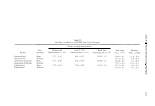
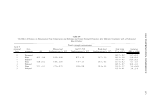
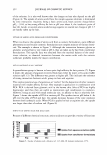
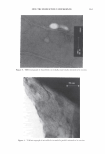
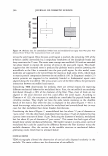
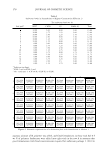
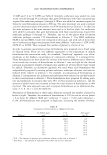
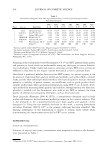
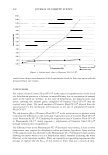
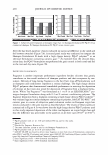
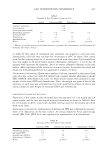
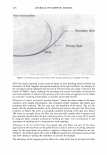
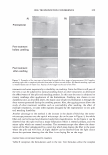
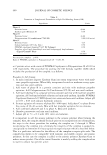
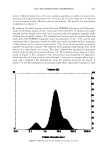
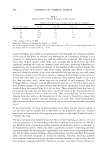
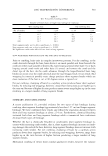
460 JOURNAL OF COSMETIC SCIENCE Table II Formation of Complex and Formulation of Split End Mending Serum (61B) Phase A Deionized water Xanthan gum (Rhodicare T) Phase B Deionized water Ingredients Polyquaternium-28 (conditioneze® NT-20) Phase C Deionized water Sodium hydroxide (10% Ag. Soln.) PVM/MA copolymer (Gantrez® S-97 BF Polymer) Propylene glycol (and) diazolidinyl urea (and) iodopropynyl butylcarbamate (Liquid Germall® Plus) Percent active complex = 2.00%. Ratio of PVM/MA copolymer to Polyquaternium-28 = 0.20:1.80. 49.00 0.50 36.00 %w/w 9.00 (1.80 active) 4.24 0.56 0.20 0.50 100.00% at 2 percent active with a ratio of PVM/MA Copolymer to Polyquaternim-28 of 0.20 to 1.80 respectively. The procedure for putting the full formula together (61B) which includes the production of the complex is as follows. Procedure for full formula 1. In main container disperse Xanthan Gum into room temperature water with mod- erate propeller agitation. When fully incorporated switch to moderate sweep agita- tion and mix until uniform. 2. Add water of phase B in a premix container and mix with moderate propeller agitation. Add Polyquaternium-28 (Conditioneze NT-20) and mix until uniform. 3. Add water of phase C to a separate premix container and mix with moderate propeller agitation. Add sodium hydroxide solution and mix until uniform. Sprinkle PVM/MA Copolymer (Gantrez S-97 BF Polymer) into vortex and mix until uniform. Adjust pH to 6.95 ± 0.05 with sodium hydroxide solution. 4. Increase agitation of contents of phase B (-1000 rpm). Add phase C to phase B over the course of 20-30 seconds. Mix with fast propeller agitation for ten minutes. 5. Add combined phases B and C to phase A. Mix until uniform. 6. Dissolve preservative and mix until uniform. 7. Adjust pH to 7 .1 ± 0.1 with 10% citric acid solution. It is important to add the anionic polymer to the cationic polymer when forming the complex. Also, the complex should be made prior to its incorporation into a formulation the steps in the above procedure for making the complex are 2 through 4. When incorporating the complex into a formula the integrity of the complex is judged mi- croscopically to determine if it has a typical microgel structure which is described below. This is a predictive indicator for the efficacy of the complex to repair split ends. The complex has shown to be compatible with nonionic and mildly cationic and anionic polymers. In this case the complex is added to the anionic polymer Xanthan Gum to make a serum product. One of the control formulas is made by adding the complex alone to water to obtain two percent active.

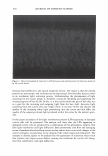
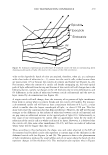
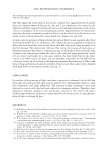
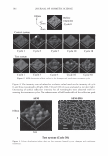
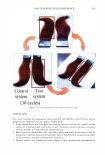
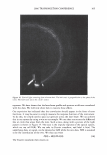
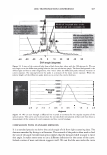
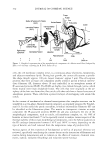
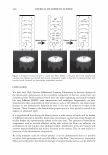
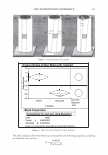
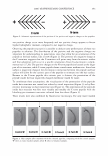
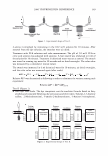
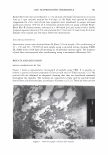
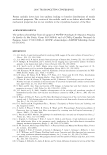
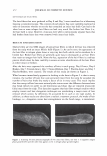
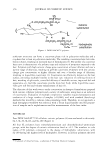
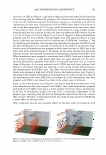
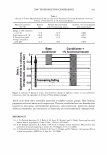
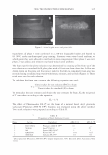
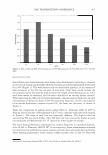
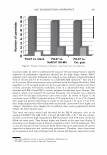
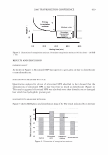
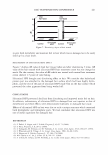
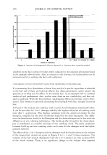
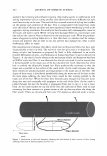
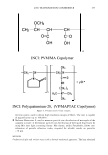
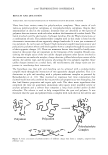
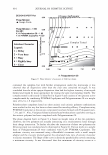
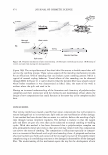
2006 TRI/PRINCETON CONFERENCE 461 RESULTS AND DISCUSSION FORMATION AND CHARACTERIZATION OF POLYELECTROLYTE MICROGEL COMPLEX There have been various names for polyelectrolyte complexes. These consist of such names as polymer-polymer complexes, or interpolyelectrolyte complexes. Despite their nomenclature as used in the academic literature they are described as two species of polymers that can interact with each other without the formation of covalent bonds. The bonds involved could be electrostatic, hydrogen bonding, Van der Waals interactions, or a combination of each. The polyelectrolyte complex used in this study is based on the electrostatic interactions of two oppositely charged molecules. It is not just a mixture of two polymers. As can be seen in Figure 6 high molecular weight linear polyanionic and polycationic polymers when combined together form a complex through the association of their opposite charges (12). There are numerous factors that should be briefly men- tioned at this point that are important in the formation of the complex. Besides con- sidering the weight ratios of the two unlike charged polymers other factors involved in the interaction are molecular weights, charge densities, pH and electrolyte content of the solvent, the solvent type, and the process· of putting the two polymers together. Since unlike charges interact on a molar basis, the stoichiometry and charge ratios are im- portant in considering their interaction. The hypothesis was that split end mending can be achieved with a polyelectrolyte complex made through the interaction of two oppositely charged polymers. This is in distinction to split end mending with a polymer-surfactant complex as patented by Ramashandran et al. (13). They invented an ingenious hair rinse composition that claimed would not only condition hair to provide such properties as wet detangling, but also lend fixative properties and repair split ends. The three main ingredients that comprised the rinse are quaternary ammonium salts (quat), water insoluble acrylic or acrylate polymers and a solvent that comprises a long chain alcohol and/or alcohol ethoxylate. The solvent is used to help compatibilize the quat and polymer. It was theorized that the quat and polymer form a complex with each other in the solvent and Polyanion Polycation - Polyelectrolyte Complex Figure 6. Ionic association of polyelectrolytes of different charge that forms a complex adapted from reference (12)_
Purchased for the exclusive use of nofirst nolast (unknown)
From: SCC Media Library & Resource Center (library.scconline.org)