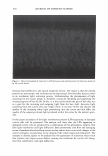
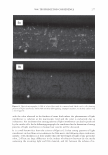
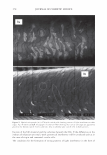
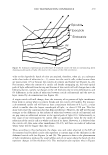
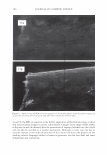
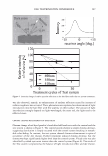
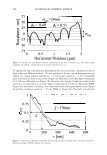
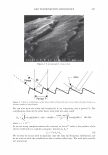
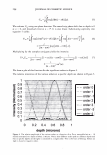
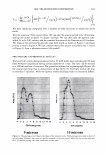
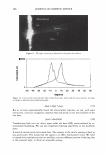
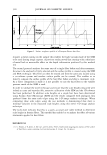
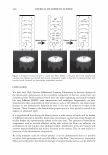
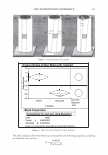
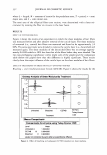
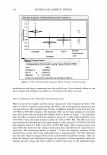
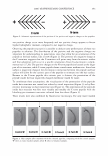
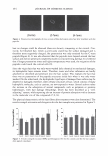
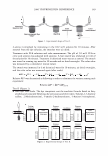
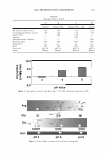
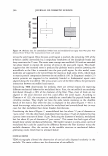
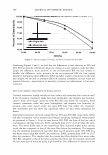
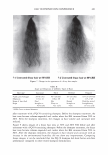
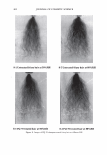
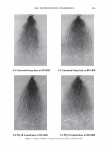
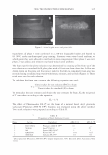
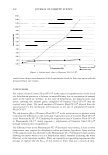
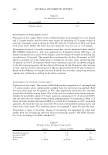
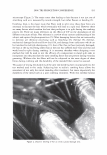
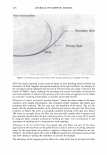
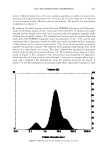
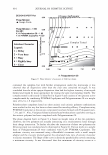
]. Cosmet. Sci.! 58, 309-310 Quly/August 2007) Three-dimensional imaging and analysis of the surface of hair fibers using scanning electron microscopy C. TOMES, J. T. JONES, C. M. CARR, D. JONES, and J. CRIMMINS, Textiles & Paper, The University of Manchester! Manchester M60 1 QD (C. T.,]. T J., C.M.C.), and Croda Chemicals Europe, Cowick Hall, Goole DN14 9AA (D.J.,J.C.), U.K. Cuticle scales are the most obvious feature of the outer surface of a hair and can be used as a means of assessing the degree of damage that the hair surface has received. Much research has focused on assessing the influence of surface topography on the associated properties of hair fibers. However, much of the research has either been qualitative, or if quantitative, has utilised relatively laborious analytical techniques to establish the necessary statistical robustness. In this review we report on the application of a 3D image analysis package capable of producing 3D data from multiple 2D Scanning Electron Microscope (SEM) images of hair fibers. Analysis of the surface profile can be carried out quickly and accurately, enabling quantification of the scale structure. This technique requires the hair fibers to be mounted onto a specifically designed SEM metal stub in order to prevent the fibers moving while image capture is in process. Four images are required for the evaluation of a single area. Images are recorded using a four quadrant (A-D) Back Scattered detector. The first image is produced using electrons collected only from quadrant 'A', by switching off the other three quadrants. The other three images were then collected in a similar manner, using quadrants B, C and D in turn. The images are then imported into the MeX program. The program uses the angular displacement between the sample and each quadrant of the detector allows MeX to generate a three-dimensional image of the fiber. Once the 3D image has been formed in MeX it can be rotated and viewed from any angle, enabling the viewer to see any surface damage such as scale lifting and buckling. The software also allows the scale heights to be measured (see Figure 1). Scale heights can be determined by locating points at the base and peak of the cuticle scale. Using the primary profile data the individual scale heights can be measured and the scale heights along the profile line can easily be extracted for statistical interpretation. In addition to the scale height measurements the software can create a profile of the fiber surface and calculate various measures of this profile, the most useful being average roughness (Ra) and root mean square roughness of the profile (R 9 ). Using SEM images and the 3D imaging software, we have established and developed two analysis protocols. The first involves multiple analyses where a large number of scale heights are recorded from both untreated and treated fibres. The sample size choice has to be great enough in order for the results to be statistically significant. This protocol 309

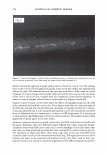
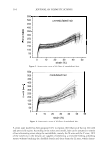
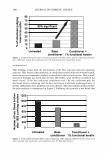
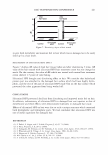
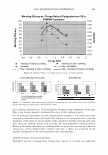
310 ': 1 JOURNAL OF COSMETIC SCIENCE aml -2.8 -3 -3.2 f----+-----+,o--- ,s,------ 20 -,.--1- -----'- --+25-- -----35 J0 +-----+-......,_40 __ aml Path length - I Figure 1. Surface roughness profile of a European Brown hair fiber. requires a metal coating on the sample this enables the high vacuum mode of the SEM to be used during image capture. A previous study proved that coating with a thin layer of metal had no measurable effect on the depth information produced by this method [l}. The second protocol analyses the same area of a single fiber before and after treatment. An area to be analyzed is firstly selected and the surface profile is created using the SEM and MeX technique. This fiber can then be treated and then the same area located using a co-ordinate system and another surface profile can be created. This enables us to directly compare the surface profile of the hair fiber before and after a treatment cycle. As a direct comparison is made it is not possible to coat the hair fibres so the variable pressure mode of the SEM is used. In order to validate the novel technique and ensure that the scale heights measured were indeed accurate and reproducible, extensive calibration of the SEM and the 3D software has been performed. In addition scale heights on a single hair have been determined using Atomic Force Microscopy (AFM) and the results compared with analogous data produced from the same scale edges using the 3-D image analysis technique. When comparing these scale edges using the two methods it demonstrated that there is minimal variation in the measured scale heights using this novel 3-D image analysis technique The work done indicates that this is a quick, accurate and viable method to determine scale height in keratin fibers. This method has enabled us to analyze the effect of various treatments applied to hair fibers. REFERENCES (1) C. Tomes, J. T. Jones, C. M. Carr, and D. Jones, Three-dimensional imaging anl analysis of the surface of hair fibers using scanning electron microscopy, J. Cosrnet. Sci. (in press).
Purchased for the exclusive use of nofirst nolast (unknown)
From: SCC Media Library & Resource Center (library.scconline.org)