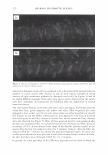
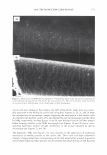
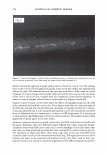
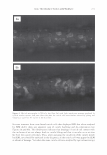
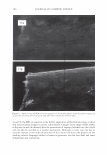
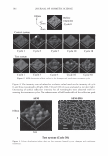
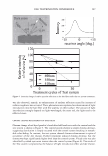
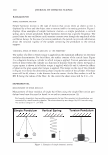
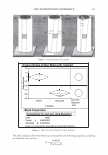
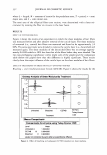
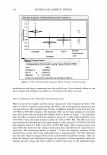
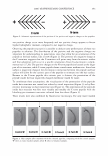
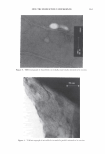
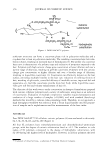
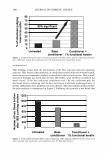
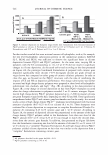
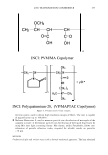
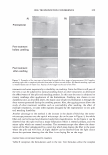
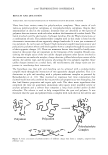
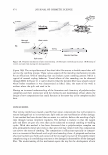
340 JOURNAL OF COSMETIC SCIENCE polymers are cationic, since electrostatic interactions are believed to play a determining role in the adsorption mechanism (7). The exposure of the hair to sun, wind and modern hair styling products and techniques (e.g. shampooing, combing, blow-drying, bleaching, colouring and shaping of hair with wave preparations) imparts significant and unwanted damage to the cuticle and cortex of the hair shaft. This damage results in a loss in body, lustre, and smooth texture. Such damage is also reflected in poor wet and dry combability, increased electrostatic charg- ing, reduced tensile strength and breaking of the hair and in the poor appearance of hair styles. The main objectives of hair care product development are then to inhibit or reduce the damage caused by the factors described previously and to create an improved feel of the hair (8). The cosmetic industry also takes an interest in the penetration of several substances into hair fibres in order to improve the knowledge of diffusion processes in hair (9,10). To study the diffusion of molecules into hair, fluorescence dyes are often used and in this case the penetration can be investigated by conventional fluorescent microscopy. The use of protein materials in the formulation of modern hair care products to provide shine, strength, softness, smoothness and good combing properties is well known and began more than 50 years ago. Several patents disclose compositions capable of perme- ating into shampooed hair to impart hair with moistness and to provide excellent finishing effects by including proteins or proteins hydrolizates, like for example a water-soluble compound derived from a vegetable protein derivative (11), non-naturally occurring keratin proteins (12), a mixture of a hydrolysed protein and an amino acid with aliphatic side chain (13) and several hydrolysed proteins (14,15). The present study describes how the structure of two peptides, which differ only in their conformation from the N to the C-terminal, influences in their penetration inside human hair. It was verified that their penetration inside hair was structure dependent and it was essentially driven by electrostatic charging. These peptides were capable of restoring the tensile strength of bleached hair, thus compensating for its damage, which could rep- resent a new methodology for hair treatment. EXPERIMENT AL DETAILS/MATERIAL AND METHODS HAIR SAMPLES AND PEPTIDE STRUCTURES European virgin white hair samples were received from IMHAIR Ltd. (Italy). The peptide structures were synthesized by JPT Peptide Technologies GmbH (Berlin, Ger- many). The two synthesized peptides, with 17 amino acids each, were: C-term: 11111 LCLCL LLKAK AK N-term: KAKAK LLLCL CLLLL LL where L, C, K and A is the one-letter code to the amino acids Leucine, Cysteine, Lysine and Alanine. All the peptides were covalently linked by the N-terminal to a fluorescent dye, (5(6)-carboxytetramethylrhodamine, succinimidyl ester) i.e. 5(6)-TAMRA, with spectral properties of Absmax = 544 nm and Emmax = 572 nm, to facilitate the analysis of peptide penetration. The peptides molecular weight was 2292.67 g/mol and they were supplied as a lyophilized material. They were analysed by HPLC and MS, and their

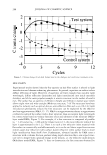
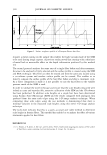
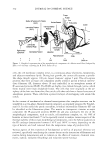
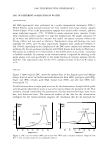
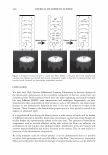
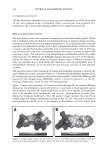
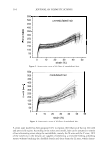
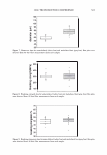
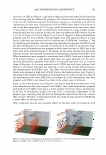
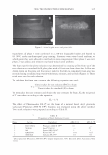
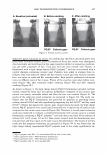
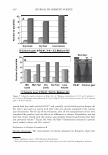
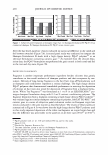
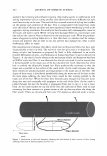
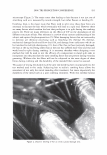
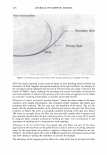
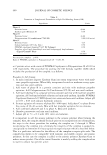
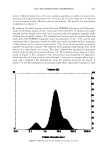
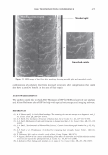
2006 TRI/PRINCETON CONFERENCE 341 purity was over 70% (HPLC, 220 nm, Cl8, linear gradient). All other chemicals used were of analytical grade. PEPTIDE SURFACE CHARGE ANALYSIS The peptide surface charge analysis was obtained by using the PyMOL v0.99 (16). PyMOL (16) is an open source molecular graphics system designed for real time visual- ization and rapid generation of high-quality molecular graphics images and animations. HAIR PRE-TREATMENT The pre-treatment process was carried out using all the samples simultaneously, such that they received exactly the same extent of processing. Hair was either washed in distilled water at 50°C for one hour (samples labelled as W) or bleached, at 50°C in 0.1 M Na 2 CO/NaHCO 3 pH 9 buffer, 10% H 2 O 2 ' also for one hour (samples labelled as B). PREPARATION OF PEPTIDE SOLUTIONS A 0.2 g/1 peptide solution was prepared with the addition of a surfactant, 1.8 g/1 of dipalmitoyl phosphatidylcholine, in a small volume of ethanol to dissolve both the peptides and phosphatidylcholine. Distilled water was added and ethanol was allowed to evaporate at room temperature or in a water bath at about 40°C. The peptide solution was refilled with distilled water to the desired level (the final volume). HAIR TREATMENT WITH THE PEPTIDES The hair samples were treated with a solution of these peptides, using a bath ratio of 1/100 (w/v) and the control sample was washed or bleached hair. The treatment was performed at 3 7°C, 100 rpm of stirring, for 5 hours. After the treatment, hair samples were well washed under running water and washed with a commercial shampoo, rubbing up with fingers for about 1 minute. After shampoo washing, hair tresses were well washed with distilled water and allowed to air dry. TENSILE STRENGTH MEASUREMENTS The method used broadly follows the guidelines laid down in ASTM Dl445-95 for the tensile testing of fibres. The measurements were performed with an Instron 4505 tensile tester with a maximum load cell capacity of 2.5 N. For each measurement, 20 hairs were taken randomly from the tress. Each hair was individually mounted in the tensile jig by means of a paper device that was previously slashed using a fixed gauge length of 20 mm, and pulled under controlled conditions, at a rate of lmm/min, until breakage occurred. For each hair, records of applied load against extension were taken and using an average mean diameter of 7 5 µm, the data were converted to stress (load/unit area) against strain (% extension).
Purchased for the exclusive use of nofirst nolast (unknown)
From: SCC Media Library & Resource Center (library.scconline.org)